Affiliated Groups
Matt Higgins, E.P.Abraham Professor of Structural Biology
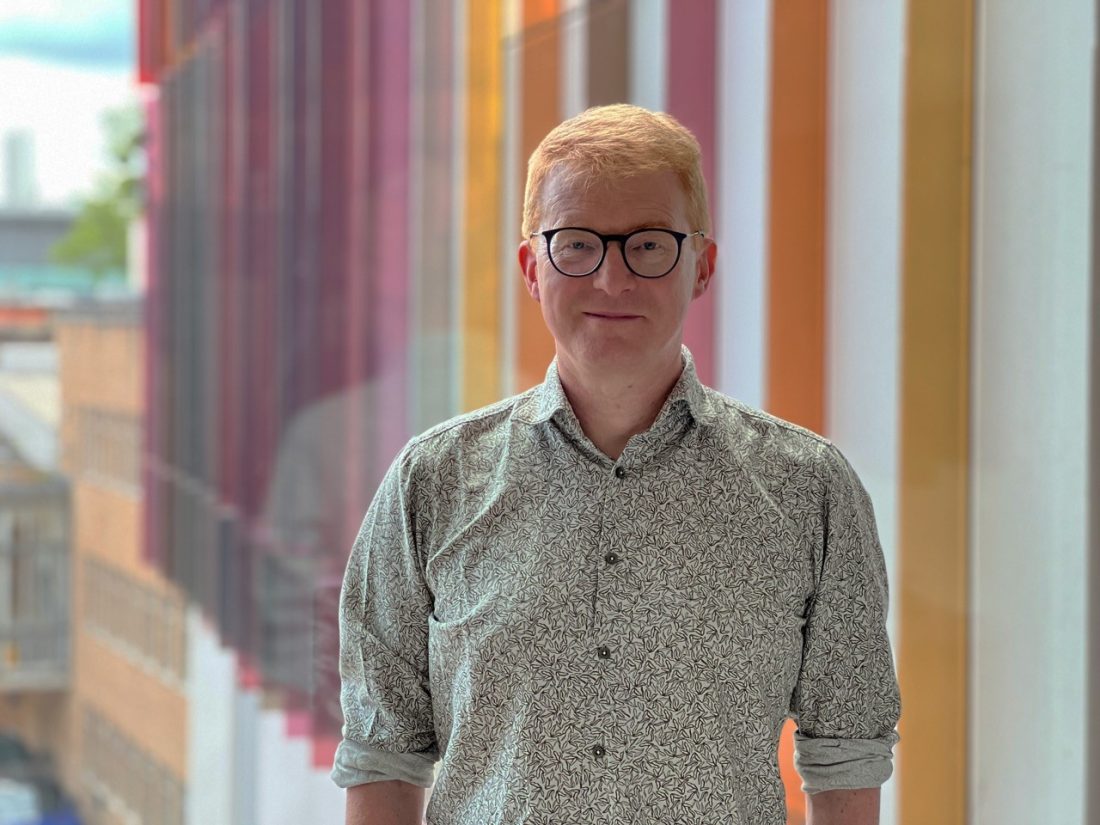
Matt Higgins is the E. P Abraham Professor of Structural Biology. His research group is based in the Department of Biochemistry and he is also associated with the Kavli Institute of NanoScience Discovery, the Dunn School and Merton College. He is a Fellow of the Academy of Medical Sciences, a Member of EMBO and the Professor of Physic at Gresham College.
Matt is fascinated by human-infective parasites, such as the parasites that cause malaria. In particular, his research group study how parasites interact with their human hosts at a molecular level and they use this information to design improved malaria vaccines.
As an example, malaria parasites replicate within our red blood cells. If their ability to invade these erythrocytes is prevented, then they are unable to replicate, cause disease or be transmitted. Matt’s group have made major contributions to our understanding of the molecular machinery used by the parasites to invade erythrocytes. They use structural biology to reveal how antibodies can prevent these interactions. They then use this insight, together with the latest tools in protein design to generate novel vaccine immunogens which elicit only the most effective antibody responses.
A second theme of their work is to understand how parasites suppress our immune system. Parasites are constantly exposed to the molecules and cells of our immune systems. To survive they must avoid destruction. Matt’s group have revealed how different parasites modulate immune cell function or inhibit molecule systems, such as the complement system. Studying how these ancient parasites suppress immunity has revealed novel features of how our immune systems function.
Visiting Professors
Roger Highfield OBE, Visiting Professor in Public Engagement
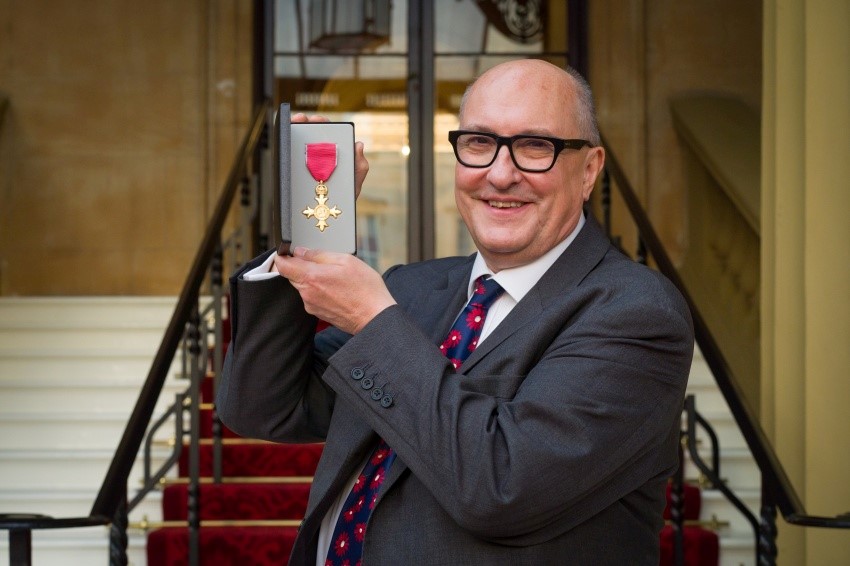
Trained as a chemist, with an undergraduate and DPhil from the University of Oxford, Roger has had a distinguished career as an author, science journalist and broadcaster. He has written 8 popular science books, and thousands of articles for platforms such as The Daily Telegraph (where he was Science Editor for 22 years) and the New Scientist, which he edited for more than three years. He is currently the Science Director of the Science Museum Group. Roger is also a Fellow of the Academy of Medical Sciences, a member of UKRI-Medical Research Council, and a visiting professor in the department of Chemistry at UCL.
Maria Leptin, Visiting Professor of Cell and Developmental Biology
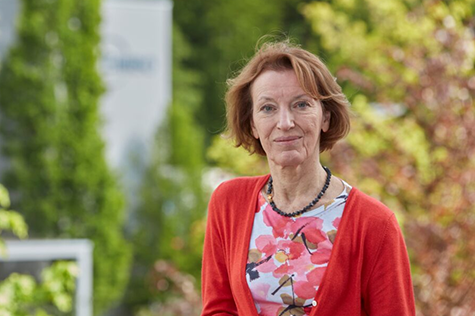
Credit: EMBL Photolab
Maria studied mathematics and biology at the University of Bonn and the University of Heidelberg. She holds a PhD from the University of Heidelberg and conducted her PhD work at the Basel Institute for Immunology. After a postdoc at EMBL, she established her research group at the Max Plack Institute of Developmental Biology in Tübingen, and then became Professor at the University of Cologne, where she still leads a research group. She also runs a research group at EMBL, which focuses on the mechanics of shape determination during development. Maria was Director of EMBO from 2010-21 and is currently the President of the European Research Council (ERC). She is a Foreign Member of the Royal Society, an elected member of EMBO, The Academia Europaea and the German National Academy of Sciences, as well as an Honorary Fellow of the Academy of Medical Sciences.
Stephen Cusack, Emeritus Director of EMBL Grenoble Research Unit
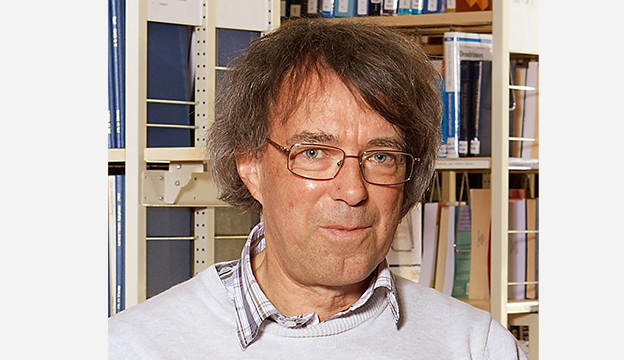 Prof Cusack is a world leader in the structural biology of protein-RNA complexes in viral replication and innate immunity. He studied physics and theoretical physics at the University of Cambridge, followed by a PhD in theoretical solid-state physics at Imperial College. He changed focus to molecular biology during his postdoc at the EMBL Grenoble, where he later became a PI and eventually Head (1989-2022). His group is interested in the structures of protein-RNA systems in gene expression, viral replication and innate immunity, with some of his most notable projects concentrating on aminoacyl-tRNA synthetases, the RIG-I receptor and viral RNA-dependent RNA polymerases. He currently focuses on structural and mechanistic studies of the influenza virus polymerase. Prof Cusack co-founded Savira Pharmaceuticals for the development of anti-influenza drugs, and has collaborated with a number of pharmaceutical companies working on antiviral, antibacterial or anti-inflammatory compounds. He played a major role in the development of the X-ray crystallography facilities at the ESRF and was a co-founder of the Instruct-ERIC project, which aims to broaden access to structural biology technologies and techniques across Europe. He is a Fellow of the Royal Society and a member of EMBO, among other honours.
Visiting Group Leaders
Visiting Group Leaders are academics associated with the Dunn School for a period of time to explore and develop scientific synergies. Visiting Group Leaders are normally sponsored by an existing group.
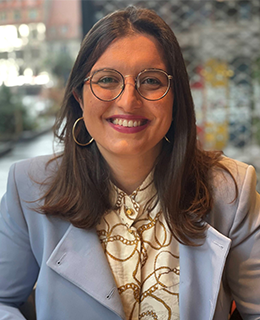
Dr Karina Pombo-Garcia, Rosalind Franklin Institute
A group leader at the Rosalind Franklin Institute on “Molecular Organization of Cell Interfaces”, Karina’s lab investigates the molecular assembly of cell-cell adhesions in epithelia tissue and in the pathology of intestinal diseases exploring biophysical mechanisms involving membrane-condensates. Combining cell biology, super-resolution STED microscopy and chemical biology, Karina aims to uncover how cells control different physico-chemical environments to drive self-organisation processes that shape mesoscale structures enabling tissue function.
Karina completed her PhD in Chemistry between Helmholtz (HZDR), Technische Universität Dresden (TUD), Germany and Monash University, Australia. Later, she shifted to do a postdoc in cell biology and biophysics at the Max Planck for Molecular Cell Biology and Genetics. During her time there, she made a key discovery on the understanding of the process by which epithelial cells connect via wetting of liquid-condensates of tight junctions. Her association with the Dunn School is sponsored by the group of Jordan Raff.