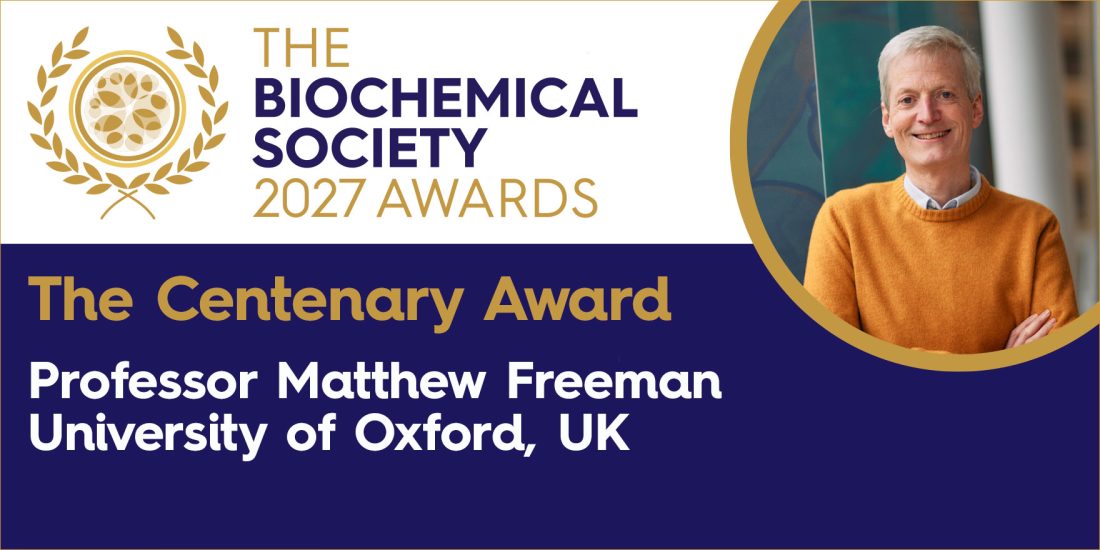
Matthew Freeman wins Biochemical Society Centenary Award
The Biochemical Society has announced today that Matthew Freeman, Professor of Pathology and Head of Department at the Dunn School, has been awarded the 2027 Biochemical Society Centenary Award, which recognises a ‘biochemist of distinction by virtue of the impact of their research, along with commitment to build, support, and nurture talent within the scientific community’.
“It’s a huge honour to receive the Centenary Award, especially when I look through the illustrious list of previous recipients. We do not do science for awards but, honestly, recognition by peers and colleagues is lovely!”, said Matthew. “Of course, the real credit for the research that my lab has done belongs to the many really outstanding past and current students and postdocs with whom I have had the privilege to work.”
Matthew Freeman’s early work on Drosophila development let to the discovery that the fly gene rhomboid encoded an entirely new and unexpected family of enzymes, the intramembrane proteases. He also found that rhomboid proteases were ubiquitous: conserved from bacteria to humans. Since then, his work has contributed extensively to the now widespread principle of transmembrane cleavage as a major cellular control function, with relevance to many aspects of health including, for example Alzheimer’s Disease and regulation of cholesterol.
His subsequent discovery of rhomboid-related proteins that have lost their enzymatic activity through evolution has had similar impact. Most notably his group found that iRhom2 is the primary regulator of inflammatory signalling by TNF. Since inflammation contributes to a vast range of diseases – indeed, TNF is the target of the highest grossing drug therapy in the world – the Freeman group’s discovery highlighted the medical significance of iRhoms. iRhoms are now underpinning new directions in basic biochemistry, as well as potential therapeutic developments for inflammatory diseases.
Explore more
Freeman group
The Freeman group investigate the interface between membrane proteins, the cell biology of signalling, and mechanisms of human disease with a focus on rhomboid-like proteins.
A word from our Head of Department
More news
The latest news stories and research highlights from the Dunn School.